Open Instagram right now and scroll through the accounts of businesses in your industry. Within thirty seconds, you can tell the difference.
Some brands stop you. Their photography is sharp and intentional. Their videos feel professional. The graphic design is clean and distinctive. You trust them, at least a little, before you have read a word of the caption.
Others you scroll past without registering. The photo is taken on a phone in bad light. The design looks like a template. The video was edited quickly with a free app. These brands are not bad businesses — they may be excellent. But they look amateur, and looking amateur has a cost.
This is the creative gap. And in Kenya’s increasingly visual digital market, it is getting more expensive to ignore.
What “Creative Services” Actually Means
Creative services is the discipline that brings a brand strategy to life in visual and audiovisual form. It is the work that makes people stop, notice and feel something about your business.
For a Kenyan business, professional creative services typically covers four areas:
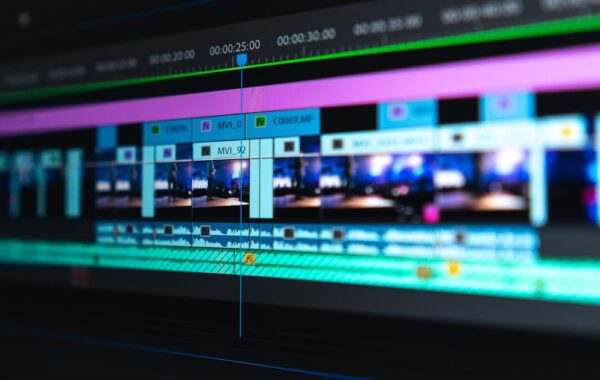
Video production — brand films, product videos, testimonial videos, social media content, corporate communications and advertising. Video is now the dominant content format across every platform Kenyan consumers use. YouTube, TikTok, Instagram Reels, Facebook — all of them privilege video. If your business is not producing professional video content, you are invisible on the platforms that matter most.
Photography — brand photography, product photography, team portraits, event coverage and content photography for ongoing use across digital channels. The image library is the visual backbone of your brand. A business that relies on stock photos or phone camera images is communicating something about itself — not intentionally, but unmistakably.
Animation and motion graphics — explainer videos, animated brand elements, infographics in motion, social content. For brands in technology, fintech, insurance or any category where the product is complex or invisible, animation is often the most effective way to communicate what you do in a way that is clear, engaging and shareable.
Graphic design — print and digital materials, brand collateral, social media templates, pitch decks, packaging, signage. Every touchpoint where your brand appears is an opportunity to communicate professionalism and consistency — or to undermine it.
The Attention Economy Is Real
There is a useful way to think about why creative quality matters so much in the current environment.
Every minute of every day, your potential customers are being targeted by other brands, other content and other distractions. The human brain, faced with an enormous amount of incoming information, makes rapid decisions about what deserves attention and what gets scrolled past.
Visual quality is one of the fastest signals the brain processes. High-quality creative — sharp, professionally lit, well-designed — signals that a business is serious, invested and capable. Low-quality creative signals the opposite, even when that conclusion is completely unfair to the actual quality of the business.
You are not judged by your intentions. You are judged by what people see. In a world where the first point of contact between your business and a potential customer is almost always digital and almost always visual, this is not a peripheral concern.
The Most Common Creative Mistakes Kenyan Businesses Make
Inconsistency across channels. Your website has one visual style, your social media has another, your printed brochures have a third. From the customer’s perspective, this raises a question: does this company have a coherent identity? Inconsistency erodes trust, even when no individual asset is badly made.
Using phone photography for brand content. Modern smartphones produce impressive images in good conditions. But they are not a substitute for professional brand photography in most business contexts. The difference is not just technical — it is compositional, directional and intentional. A professional photographer plans the shot. They direct the subject. They control the light. They produce an image that communicates something specific. A phone snapshot captures what is in front of the lens.
Treating video as an afterthought. Businesses that plan their content calendar and add “maybe a video” at the end are approaching this backwards. In the current platform environment, video should be a primary consideration, not an optional extra. What stories does your business have to tell in motion? What can your customers see that would make them more confident in choosing you?
No investment in design. Every business needs a set of professionally designed templates — social posts, email newsletters, presentation decks, proposals. Using inconsistent, off-brand design across these materials signals that the business has not thought seriously about its own image. It also makes day-to-day content creation significantly harder for the team.
Prioritising quantity over quality. The pressure to post frequently on social media has led many Kenyan businesses into a trap: they produce a large volume of low-quality content, none of which drives meaningful engagement or business results. Better results almost always come from fewer, higher-quality pieces of content than from a daily stream of whatever can be produced quickly.
What Professional Creative Work Costs — and What It Earns
There is a version of this conversation where business owners focus on the cost of professional video production or brand photography. And those costs are real — professional creative work is not cheap.
But the right question is not “how much does it cost?” It is “what does it earn?”
Consider a brand film produced for a real estate developer — a three-minute professional video showcasing a new development, filmed on location, with drone footage, interior shots and client testimonials. That film will be used on the website, in property listings, in sales presentations, on social media and in paid advertising campaigns. It will remain in use for two or more years. The cost, spread across every use and every impression it generates, is usually one of the most efficient line items in the marketing budget.
Or consider a professional photography session that produces a library of brand images — team portraits, office environments, product shots, lifestyle imagery. That library underpins every piece of digital content the business produces for the next twelve to eighteen months. Every social post, every website update, every email, every pitch deck is elevated by having a consistent, professional image library to draw from.
The question is not whether you can afford professional creative. The question is whether you can afford what it costs not to have it.
Why Creative Belongs in an Integrated Agency
Creative services do not exist in a vacuum. The most effective creative work is produced when it is directly connected to the brand strategy that defines the business’s visual identity, messaging and positioning.
A video that is beautifully made but off-brand does not serve the business. A photography library that does not align with the brand guidelines creates confusion rather than clarity. Design that does not reflect the brand strategy is just decoration.
This is why creative services work best when they are produced by an agency that also understands and manages the brand. The creative brief flows directly from the brand strategy. The visual execution is held to the standards of the brand identity. Every piece of content is measured against the question: does this make the brand stronger?
Ready to raise the visual standard of your brand? KCVP Group’s creative team works directly with your brand strategy to produce video, photography, animation and design that performs. Book a free consultation to discuss your next creative project.
📞 +254 728 851 675 | ✉ info@kcvpgroup.com | kcvpgroup.com/services/creative-services
KCVP Group Limited — Kenya’s #1 full-service media and communications agency. Uniafric House, Koinange Street, Nairobi.

Leave a Reply